

How we run growth for E-commerce.
E-commerce growth lives at the intersection of traffic, conversion, and lifetime value. We tune all three — sharpening the store, scaling profitable acquisition, and turning first orders into loyal, repeat customers.
Shopify and WooCommerce CRO, Google Shopping and Meta Dynamic Ads, email automation flows, influencer marketing, SEO/AEO/GEO, and loyalty program development.
The pillars we run for E-commerce
Where E-commerce growth breaks down.
Paid acquisition gets more expensive every quarter
Traffic converts poorly without a tuned store experience
Repeat-purchase rate decides whether you are actually profitable
Catalog and feed issues quietly cap shopping-ad performance
A complete, pre-built growth system.
Already built for E-commerce.
Nothing here starts from a blank page. Every piece beside this has been run for operators in this vertical before, so the build starts from a working system rather than a discovery phase.
- Shopify
- WooCommerce CRO
- Google Shopping
- Meta Dynamic Ads
- Email automation flows
- Influencer marketing
- SEO/AEO/GEO
- Loyalty program development
The outcomes we engineer for.
CRO on Shopify/WooCommerce that lifts conversion on existing traffic
Profitable Shopping and dynamic retargeting campaigns
Email and SMS flows that drive repeat revenue on autopilot
Loyalty programs that raise customer lifetime value
E-commerce projects we've shipped.
Real builds and growth engines we've delivered for e-commerce clients.
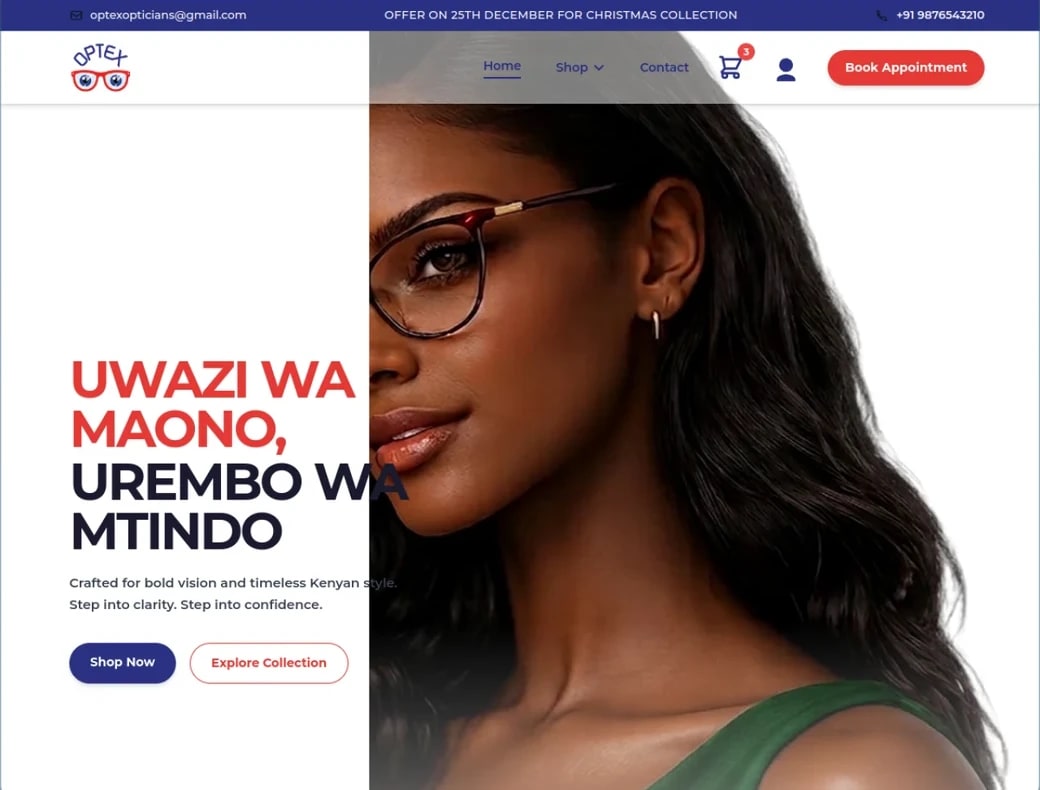 Eyewear
Optex Opticians
E-commerce, inventory & AR try-on
Customers try frames on their own face in AR before they ever walk in — and every order runs through one system from cart to stock.
- Complete e-commerce build with the order flow handled end to end
- Inventory management system for stock and frame ranges
- Brand website
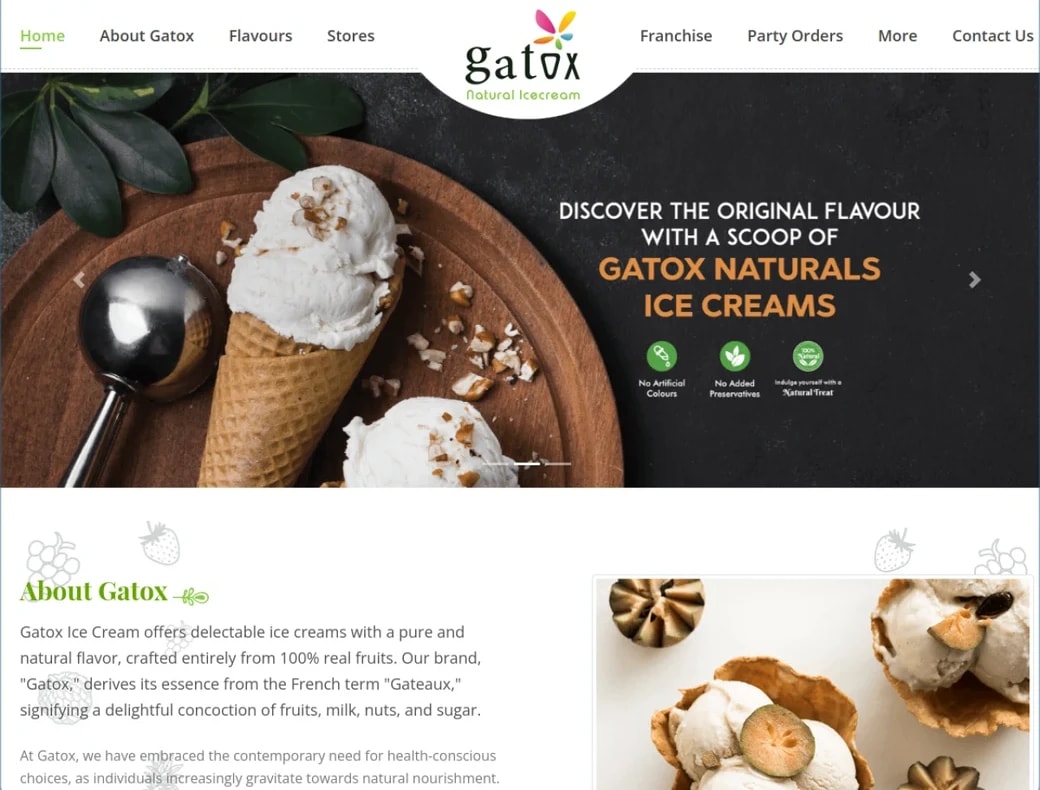 Automotive
Gatox
Redesign + sales-focused digital plan
A redesign tied to a sales plan — not a facelift, a revenue play.
- Complete website redesign
- Digital strategy built to increase sales
- Creative content production
Questions, answered.
The things teams ask before they hand an agency their growth. No lock-in, full ownership, and revenue you can see.
How do I improve conversion rate on Shopify or WooCommerce?
Start with the traffic you already have, because paid acquisition gets more expensive every quarter and conversion improvements apply to every visitor you have already paid for. The recurring culprits are familiar: slow product pages, especially on mobile; a checkout with more steps than it needs; product information that does not answer the question stopping the purchase; and weak or missing reviews at the point of decision. A store converting at 1.4% that reaches 2% has effectively cut acquisition cost by a third without touching ad spend — usually the cheapest growth available.
Why are my Google Shopping ads underperforming?
Often the feed rather than the campaign. Catalog and feed issues quietly cap shopping-ad performance in ways the campaign dashboard does not surface: missing or wrong product attributes, poor titles that fail to match how people search, disapproved items sitting unnoticed, stale pricing or availability. You end up optimizing bids on a campaign whose real constraint is data quality. It is worth auditing the feed before concluding the channel does not work — most underperforming Shopping accounts we see are limited by what the feed is telling Google, not by strategy.
How do I increase repeat purchases?
Repeat-purchase rate decides whether a store is actually profitable, because the second and third orders carry no acquisition cost. Most of the gain comes from lifecycle email and SMS flows rather than campaigns: a post-purchase sequence that earns the next order, replenishment timed to how long the product actually lasts, and win-back for customers drifting away. Loyalty programs extend this when the economics support them. The reason this is under-invested is that it produces no immediate spike the way a sale does — it changes the slope rather than creating a peak.
How do I lower customer acquisition cost?
Usually not by finding cheaper traffic, since paid channels saturate for everyone at once. The durable levers are the other two sides of the equation: converting more of the traffic you already buy, and raising lifetime value so you can profitably outbid competitors for the same click. A store with strong repeat revenue can pay more for a first order than one dependent on single purchases — which is a structural advantage no amount of bid tuning replicates. Organic and email demand help too, because they are the part of the mix that does not reprice every quarter.
Ready to put the E-commerce playbook to work?
Start with the audit — no pitch, no pressure, and you keep the findings either way.
Book a free audit